
Rivers That Shaped India
Of Civilizations, Conflicts, and Continuity

When we think about civilizations, we often imagine kings, conquests, and monuments. But long before these grand societies existed, rivers shaped the destiny of the Indian subcontinent.
India’s rivers weren’t just sources of water. They were civilizational arteries that defined where people settled and how they farmed, traded, prayed, and fought. Rivers influenced the rise and fall of empires, inspired literature, framed faiths, and continue to dictate politics even today.
This week at The Indian Clause, we will explore three great river systems of India. Together, they reveal an important truth: to understand the history of a nation, you must know its rivers.
Saraswati: The Vanished River That Refuses to Disappear
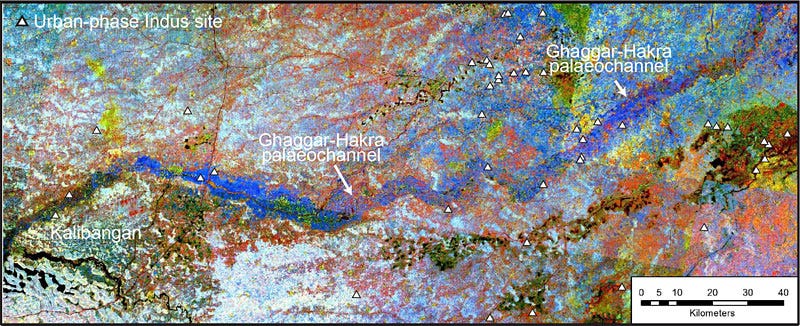
In the arid landscapes of Rajasthan and the lush plains of Haryana and Punjab, there lies the ghost of a river. Known to the ancient people as Saraswati, it is praised in the Rigveda as a mighty stream, flowing from the Himalayas to the sea. Some 70 hymns extol her strength, which surpassed even the Ganga in religious importance during the Vedic era.
For centuries, Saraswati was dismissed by colonial historians as a myth. Yet modern satellite imagery, alongside geological and archaeological studies, has confirmed the existence of an ancient riverbed called “The Ghaggar-Hakra System” that matches Vedic descriptions almost exactly. This dry channel runs through Haryana, Punjab, and Rajasthan, extending into present-day Pakistan.
Archaeological evidence reveals over 400 Harappan and pre-Harappan sites along this course. Settlements like Rakhigarhi (Haryana), now identified as the largest Harappan city, alongside Kalibangan (Rajasthan) and Banawali (Haryana), bear the traces of a thriving civilization nourished by this vanished waterway. Some scholars have even proposed renaming the Indus Valley Civilization as the Sindhu-Saraswati Civilization to reflect these findings.
Around 2000 BCE, tectonic shifts diverted Himalayan rivers like the Yamuna eastward and the Sutlej westward, severing Saraswati’s glacial sources. The river dwindled, became seasonal, and then disappeared altogether. The sudden disappearance likely contributed to the decline of these urban centers.
Today, Saraswati lives on—not in water, but in memory and mythical history. At the Triveni confluence in Prayagraj, pilgrims still remember her as the invisible force that joins the Ganga and the Yamuna. Politically, the existence of Saraswati has reignited the debate over India’s past. Geologically, she challenges us to reimagine life in early settlements.
Ganga: A Confluence of Power, Purity, and Politics
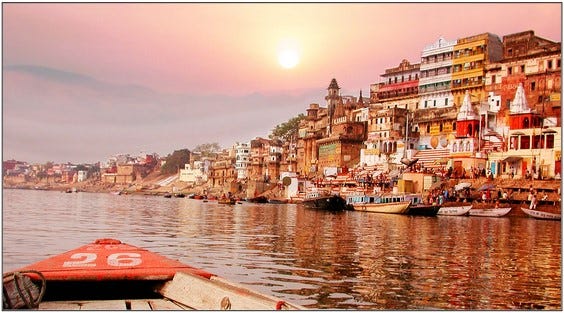
If Saraswati wrote the script of India’s past, the Ganga continues to author its present. Rising from the Gangotri glacier in Uttarakhand and stretching eastward towards the Bay of Bengal, the Ganga touches the lives of over 500 million people today. Its rushing waters have become a poignant religious symbol of life, death, purity, and rebirth.
Throughout time, the Gangetic Valley has acted as India’s spine. The sacred cities of Varanasi (Kashi), Prayagraj (Allahabad), and Pataliputra (modern Patna) were all built on her banks. Pataliputra, which was popularly known as the capital of the Mauryan Empire (322–185 BCE), boasted of its fertile lands and was strategically important because of the Ganga. Moreover, the river connected inland cities to eastern seaports like Tamralipta, which facilitated trade with Southeast Asia during the Gupta period.
The Mughal Empire fortified Prayagraj and renamed it Allahabad under the reign of Akbar, recognizing the Ganga’s martial and economic value. Later, the British East India Company turned Kolkata—which was anchored at the Gangetic delta—into its imperial capital and exploited the river’s reach.
Beyond commerce and strategy, the Ganga is spiritually significant for the Hindus. It is believed that bathing in her waters cleanses sins, and immersing one’s ashes in her waters ensures liberation from the cycle of rebirth. Gatherings like the occasional Kumbh Melas (fairs) at Prayagraj witness millions gather at the confluence of the Ganga, Yamuna, and Saraswati, further reflecting her unmatched cultural status.
Today, Ganga faces grave challenges. Pollution from sewage, industry, and ritual waste has turned the once clear currents into health hazards. The Namami Gange Project, launched in 2014, aims to rejuvenate this sacred yet suffering river. But the fight to save the Ganga mirrors larger issues of sustainability, governance, and faith.
Kaveri, Krishna, and Godavari: The Southern Lifelines of Dynasties and Disputes
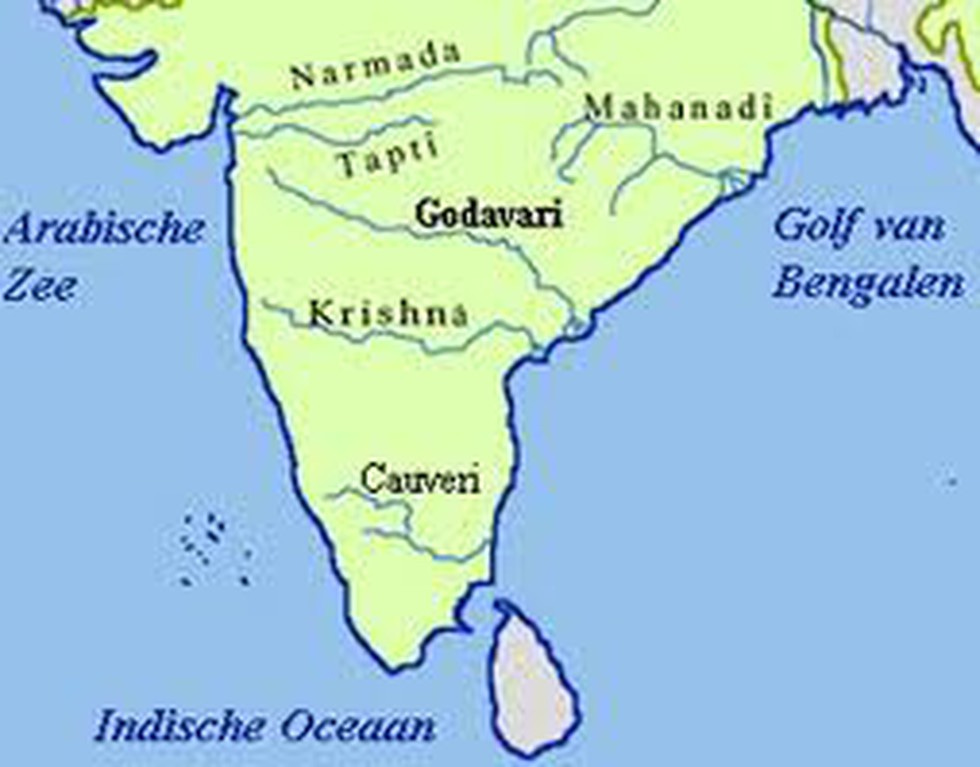
While the north often dominates the narratives on river systems, those from the south have been no less influential in shaping birthing kingdoms, economies, and conflicts.
The Kaveri River, flowing from Karnataka into Tamil Nadu, served as the lifeline of the Chola Empire (9th–13th centuries CE). The Cholas engineered vast networks of tanks, canals, and reservoirs, transforming the Kaveri delta into an agricultural powerhouse. Their capitals, Thanjavur and later Gangaikonda Cholapuram, were sustained by this river system, allowing them to build stellar temples and lead naval expeditions to Southeast Asia.
However, these waters continue to breed conflict. The Kaveri water dispute between Karnataka and Tamil Nadu over river-sharing rights has spanned decades, often flaring into legal battles and public unrest. The Kaveri Water Tribunal and multiple Supreme Court rulings reflect the river’s massive political heft.
Further north, the Godavari, often called the Dakshin Ganga or Ganga of the South, flows through Maharashtra, Telangana, and Andhra Pradesh. In the past, it nurtured trade and culture from Pratishthana (modern Paithan) to Kotilingala. The Satavahana dynasty (1st BCE–3rd CE) relied on its waters for agriculture and trade routes linking inland cities to the eastern seaboard.
The Krishna River threads through Maharashtra, Karnataka, Telangana, and Andhra Pradesh, supporting the Vijayanagara Empire (14th–17th centuries CE) and its capital at Hampi. Like the Kaveri, it underpinned agriculture, trade, and fortifications. Ports such as Machilipatnam became important conduits to foreign markets.
Both Godavari and Krishna are embroiled in disputes over water rights between states—a reminder that rivers might outlive dynasties, but not human rivalries.
Why Rivers Still Matter
Rivers were more than key geographical features on India’s map. They were responsible for the rise of empires that made the subcontinent what it is today. Trade routes, religious beliefs, and cultural practices all flowed from their waters. India’s great rivers continue to determine its politics, economics, faith, and conflict.
The Saraswati’s dry bed narrates the tales of vanished civilizations.
The Ganga remains a living paradox of purity and pollution.
The Kaveri, Godavari, and Krishna fuel both prosperity and dispute.
Together, they remind us that India was not drawn by borders but by its waters, which still write its story.
Coming Up Next at The Indian Clause:
India on a Plate: How Spices, Regions, and Culture Shape What We Eat
From the fiery kitchens of the South to the fragrant fare of the North, we break down how geography, history, and belief shaped India’s relationship with food and why no two regions taste the same.
We’ll explore North, East, West, and South India, comparing how each uses spices as a reflection of its identity, climate, and history.
Because in India, food is life itself.
— The Indian Clause
Written By: Aayush
Edited By: Alankrita Verma
This is really well researched and really fascinating, I never knew about the depth of history behind the rivers in India.